Founders · Sales
Customers
“We need more customers who actually pay.”
The game finds: Whether the leak is the market, the offer or the channels.
The marketing board game
Mukika has one job: make you feel why businesses really win: starving markets, irresistible offers, funnels that do math instead of magic. You'll learn it in one game night, because losing a round teaches faster than a semester.
One game, every part of the business
Customers, clients, people to hire, partners, suppliers, even attention for yourself: each one is a market. Mukika finds where the money leaks, what is holding back your profit, and what to fix first.
“We need more customers who actually pay.”
The game finds: Whether the leak is the market, the offer or the channels.
“Our B2B pipeline is thin.”
The game finds: Who really decides, what they need to hear, and where to reach them.
“We sell to everyone and win no one.”
The game finds: A narrower market that is hungry for what you sell.
“People only buy when we discount.”
The game finds: An offer worth paying full price for, so profit grows, not just sales.
“Good people don't apply, or don't stay.”
The game finds: Candidates as a market, and the job as an offer they want.
“Nobody sends us leads.”
The game finds: Who already serves your customers, and an offer worth promoting.
“Suppliers don't put us first.”
The game finds: How to become the client a good supplier wants to serve.
“Nobody knows what I'm good at.”
The game finds: You as the offer, and the channels that reach the right people.
Every card is a real business decision. The debrief shows what it would cost you in the real world.
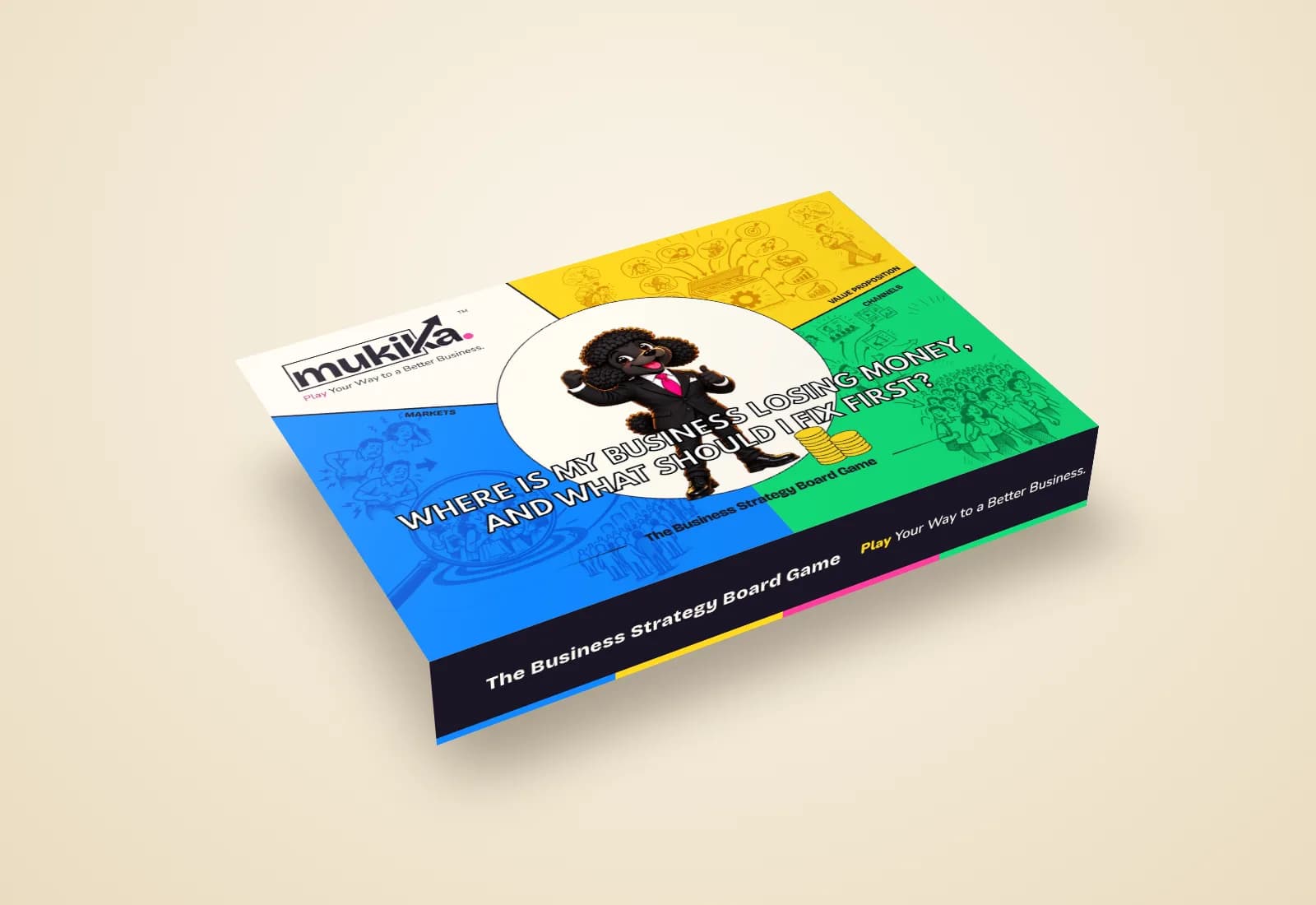
The box
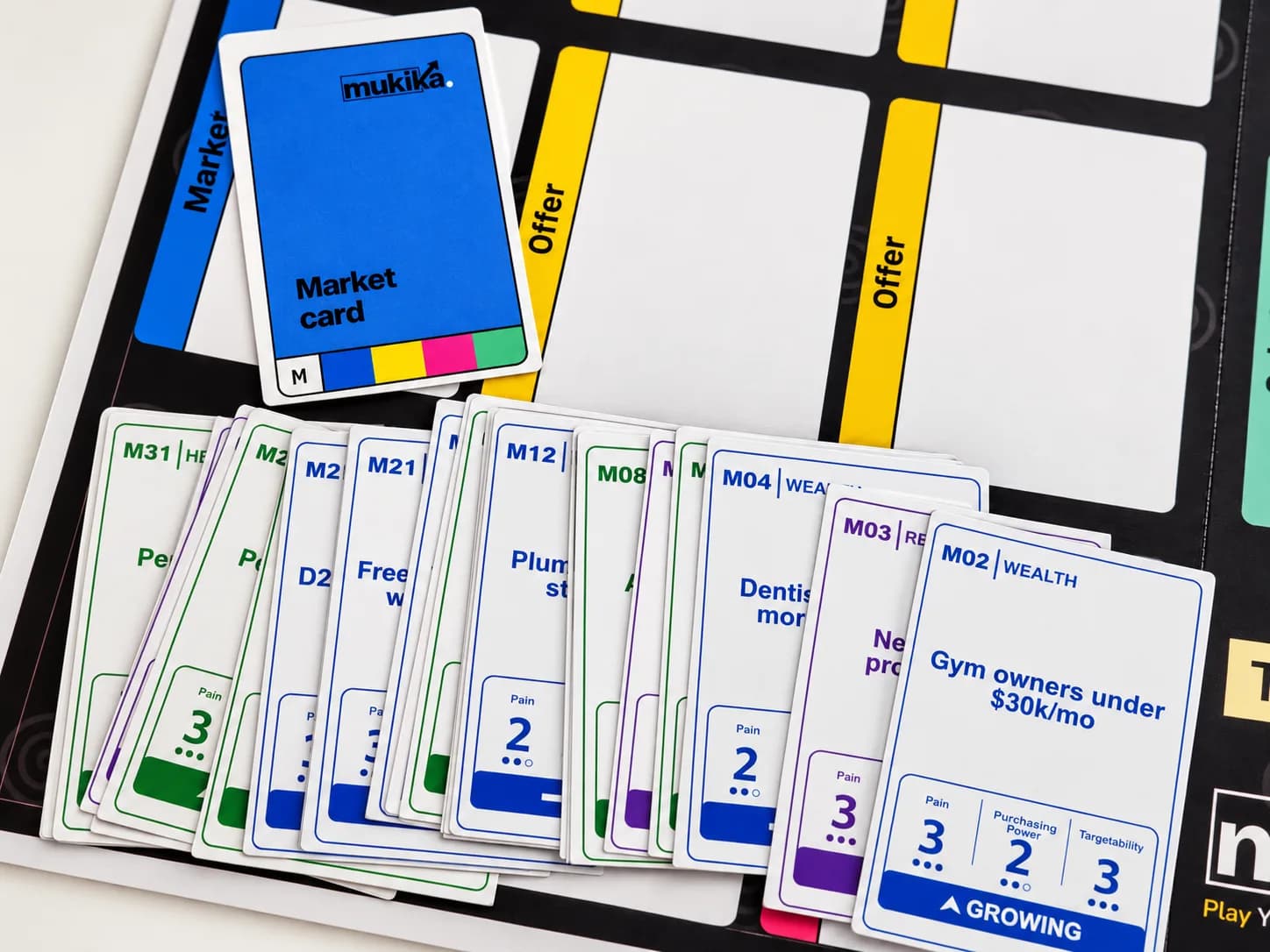
36 Market cards
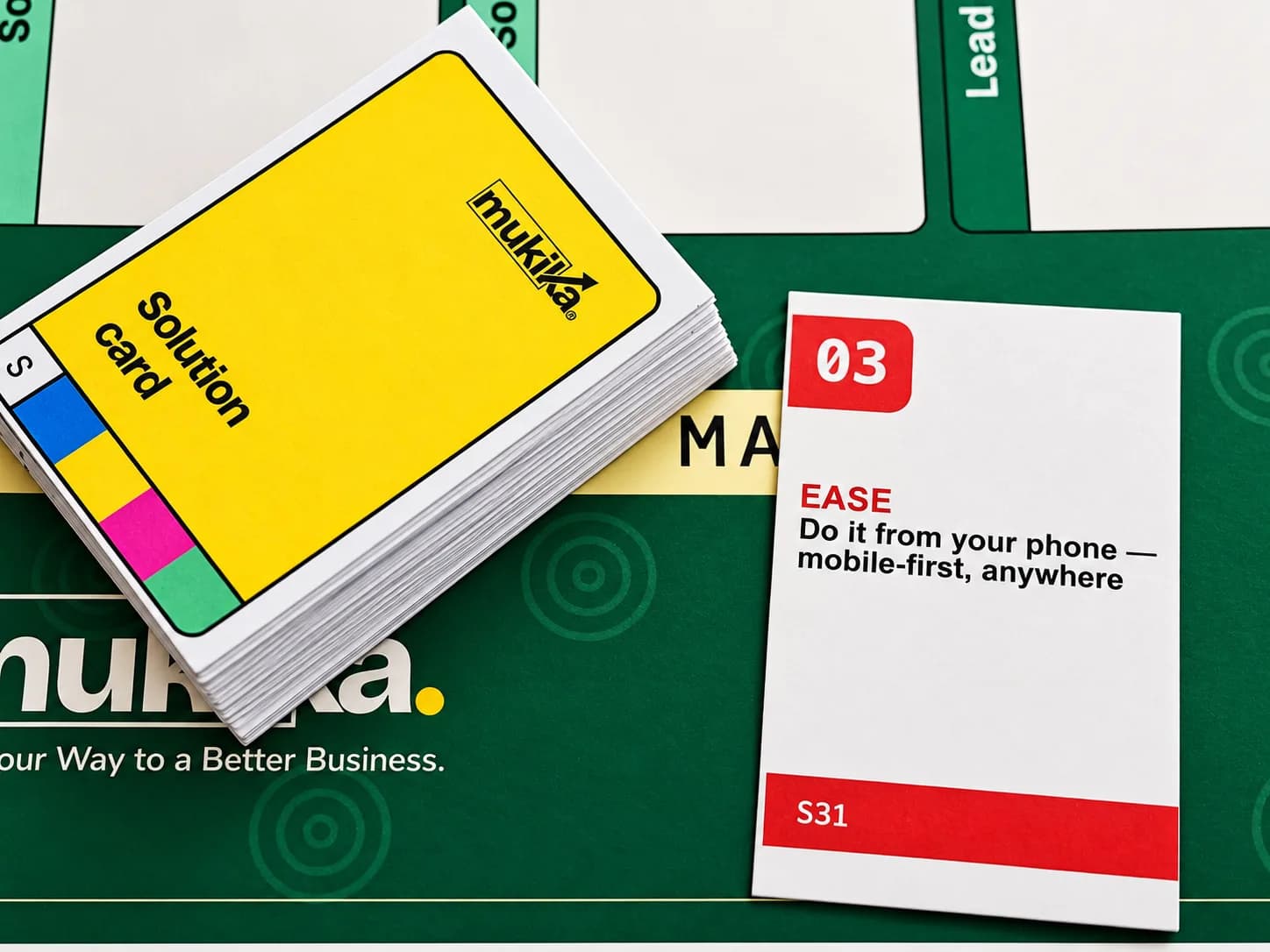
36 Solution cards
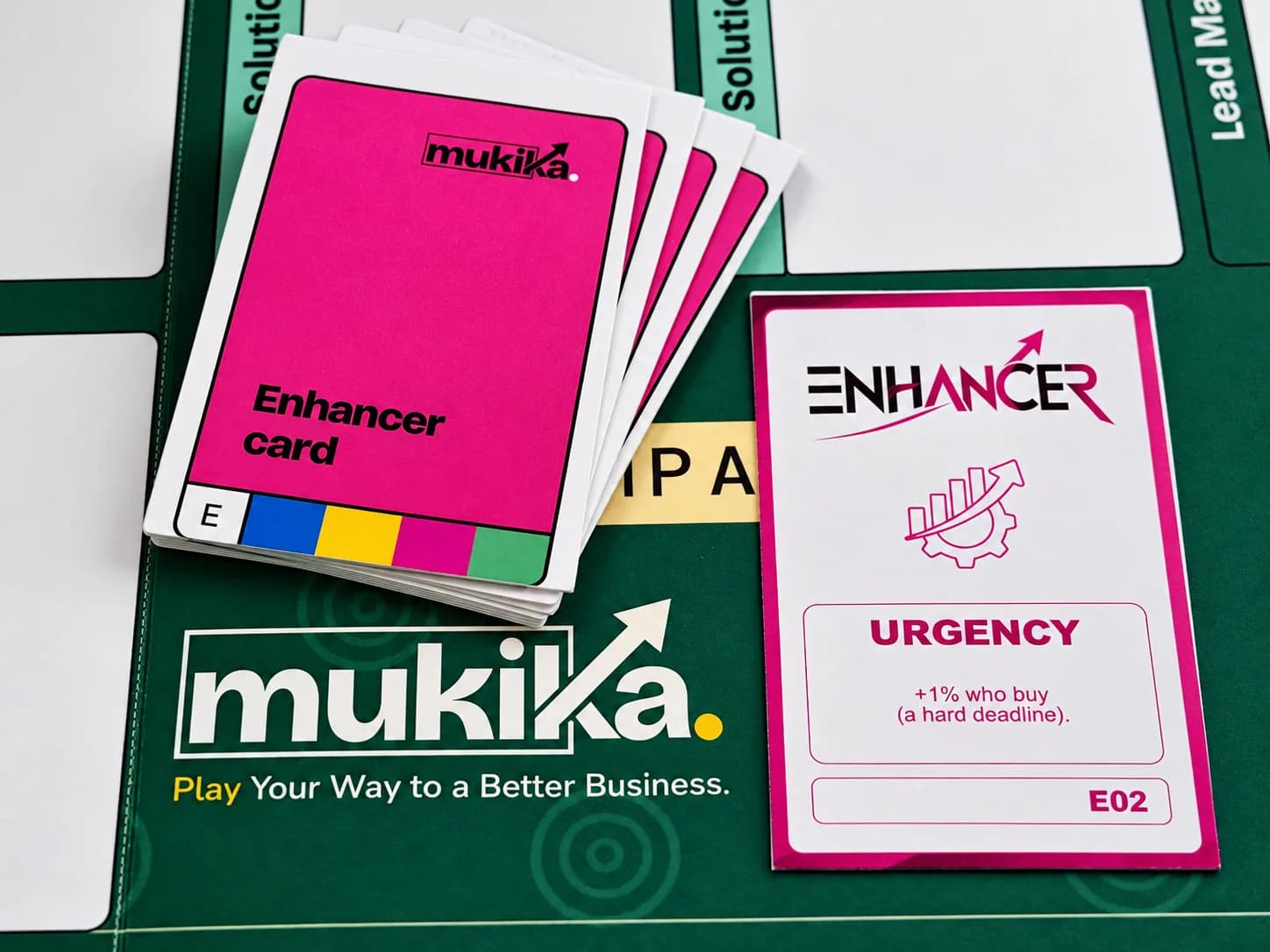
Enhancer cards
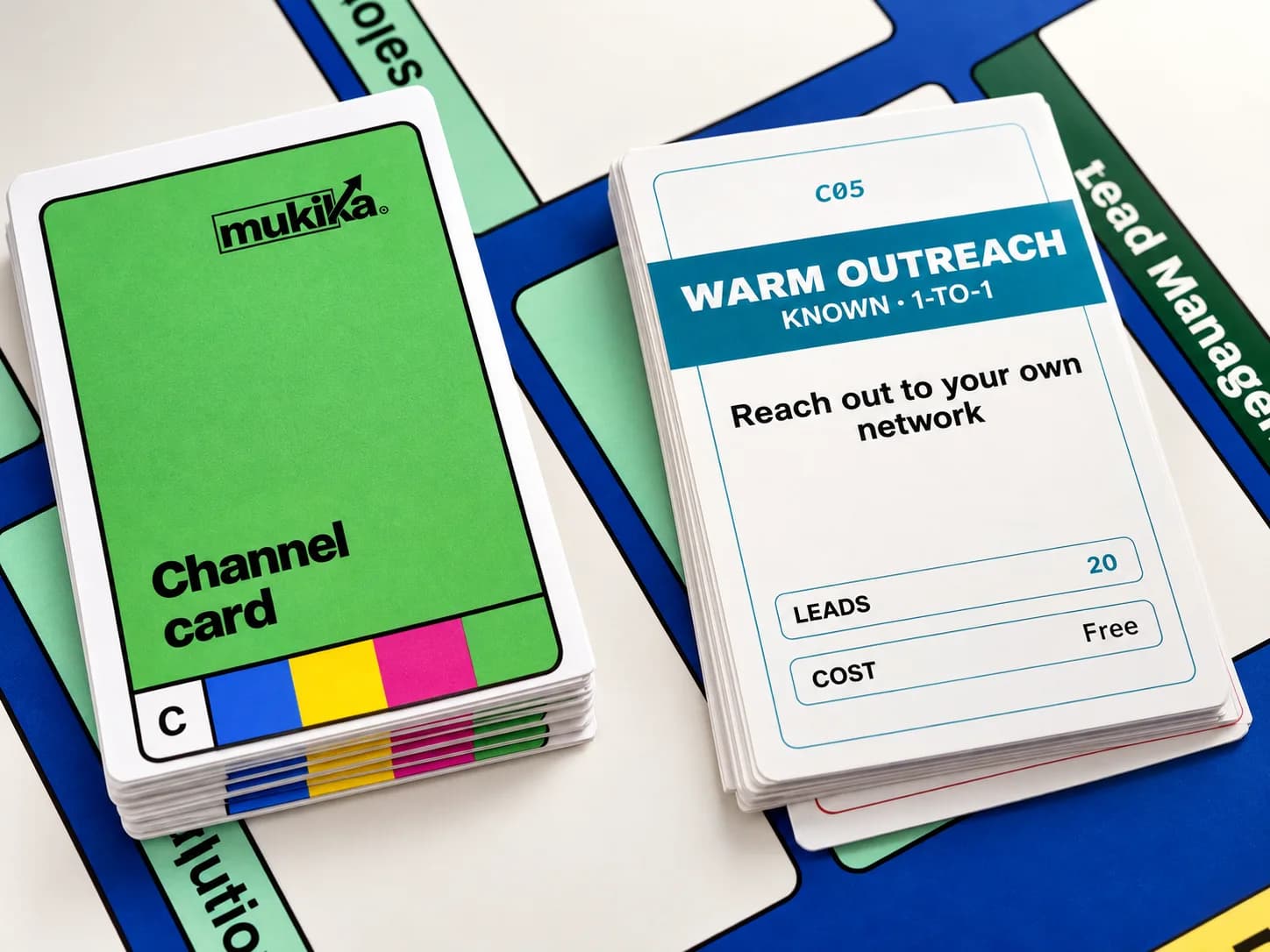
Channel cards
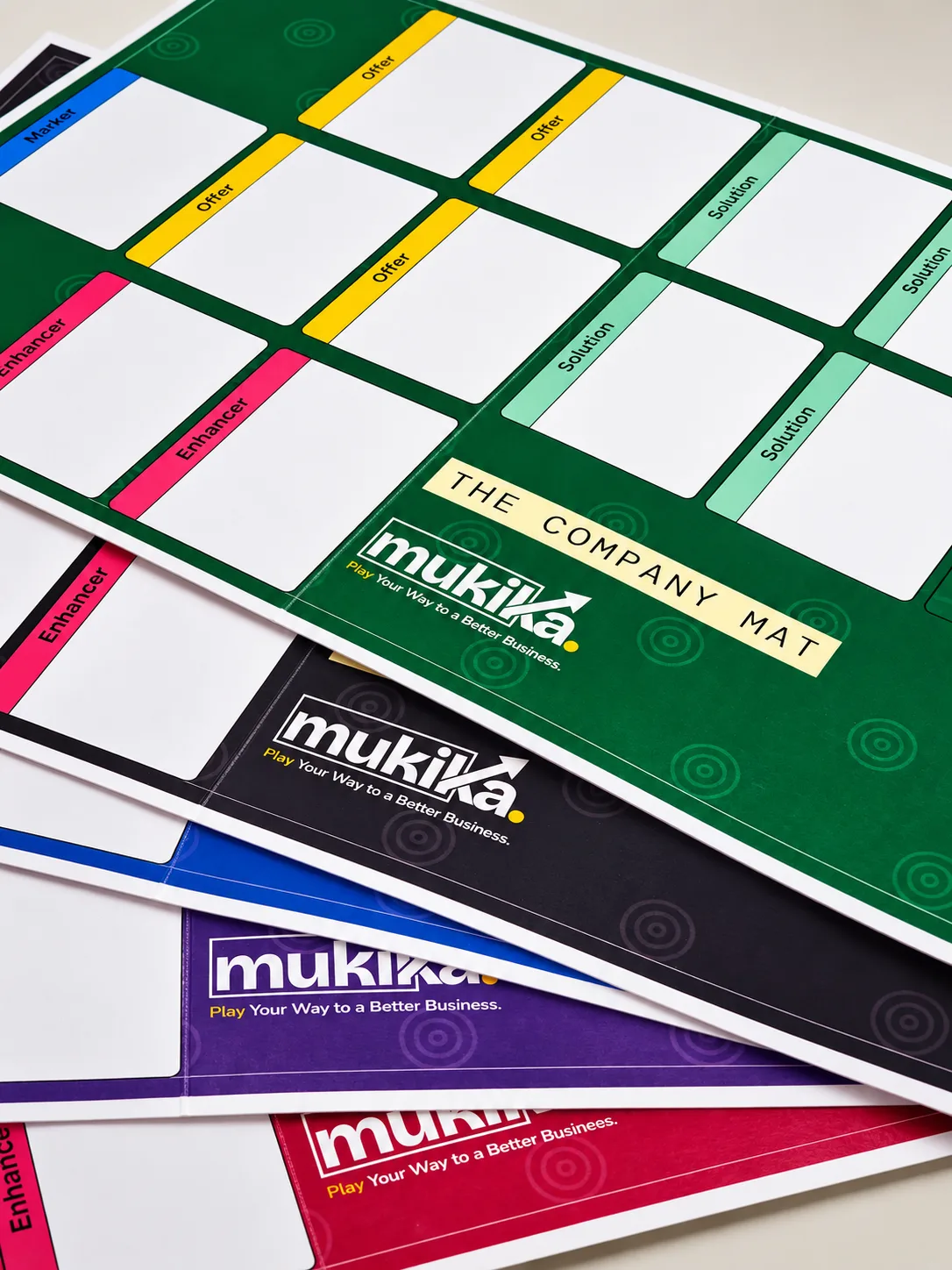
The Company Mat
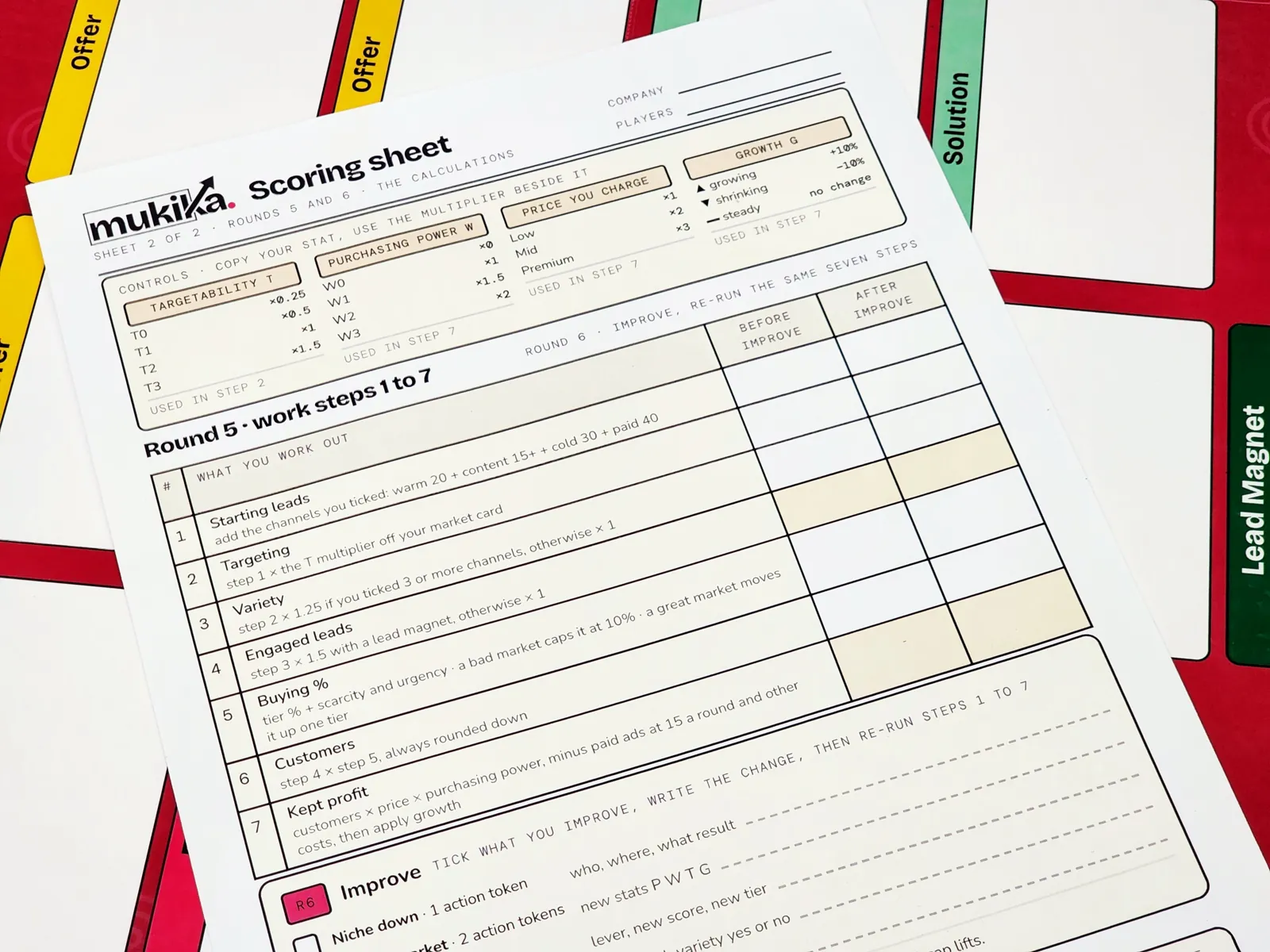
Scoring sheets
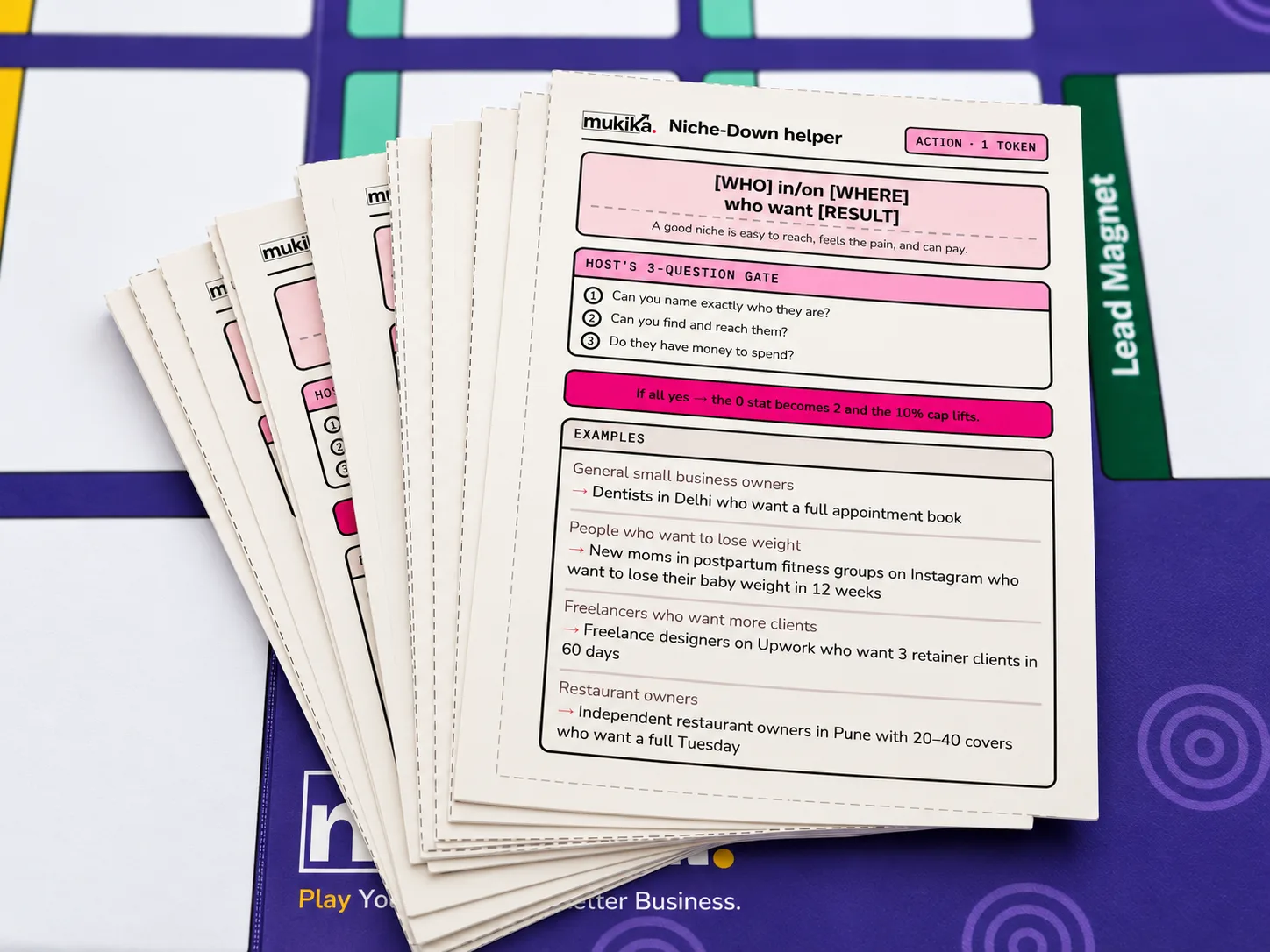
The Niche-Down card

Feel exactly why your offer sells, or doesn't, before you spend another rupee on ads.

One session gives the whole department a shared language: market, offer, channels, math.

Marketing theory that sticks, because losing a round beats memorizing a framework.
How a session runs
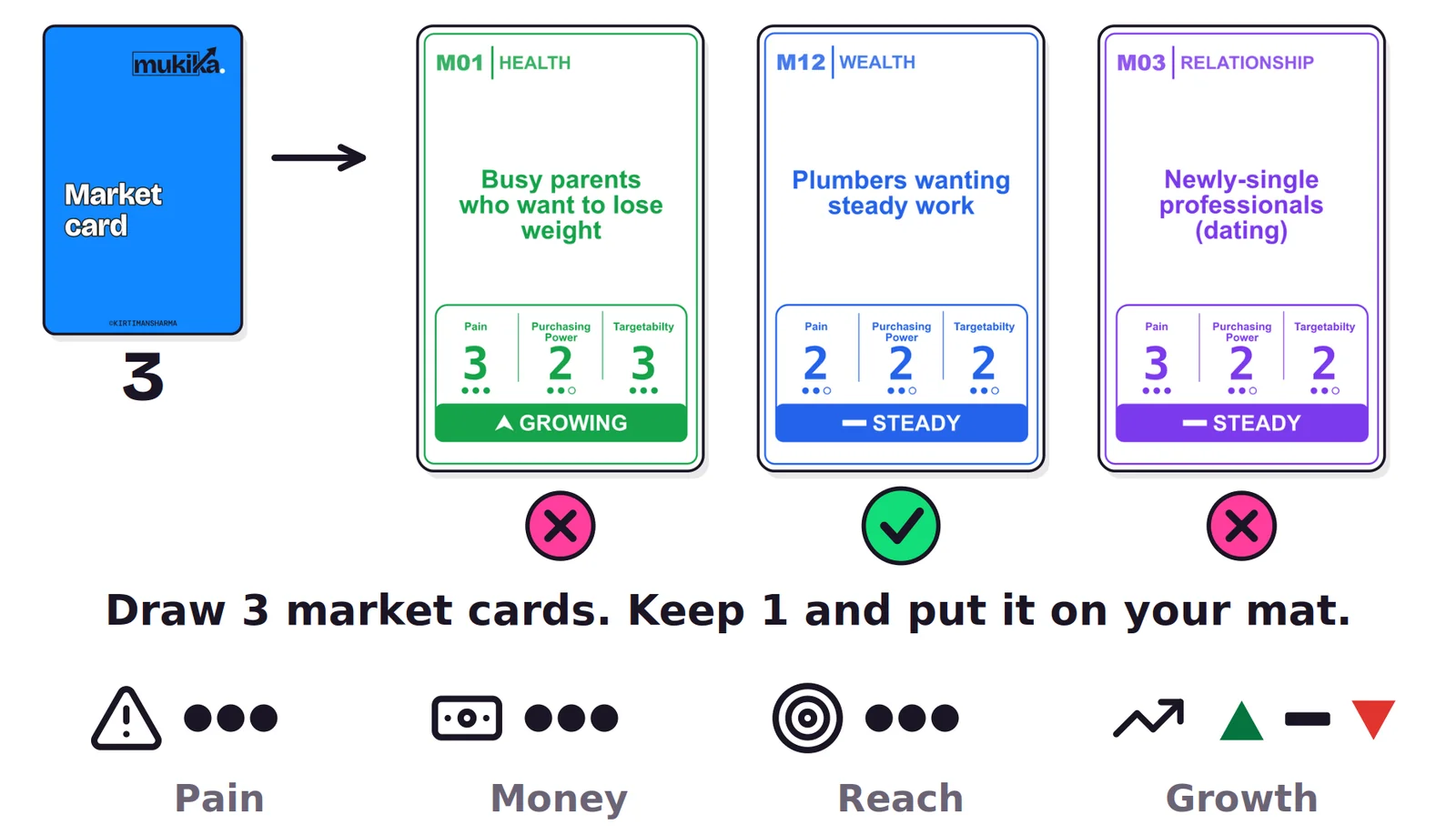
Three market cards, two minutes, keep one. Pick a starving market and everything after gets easier. Pick a dead one and nothing saves you.
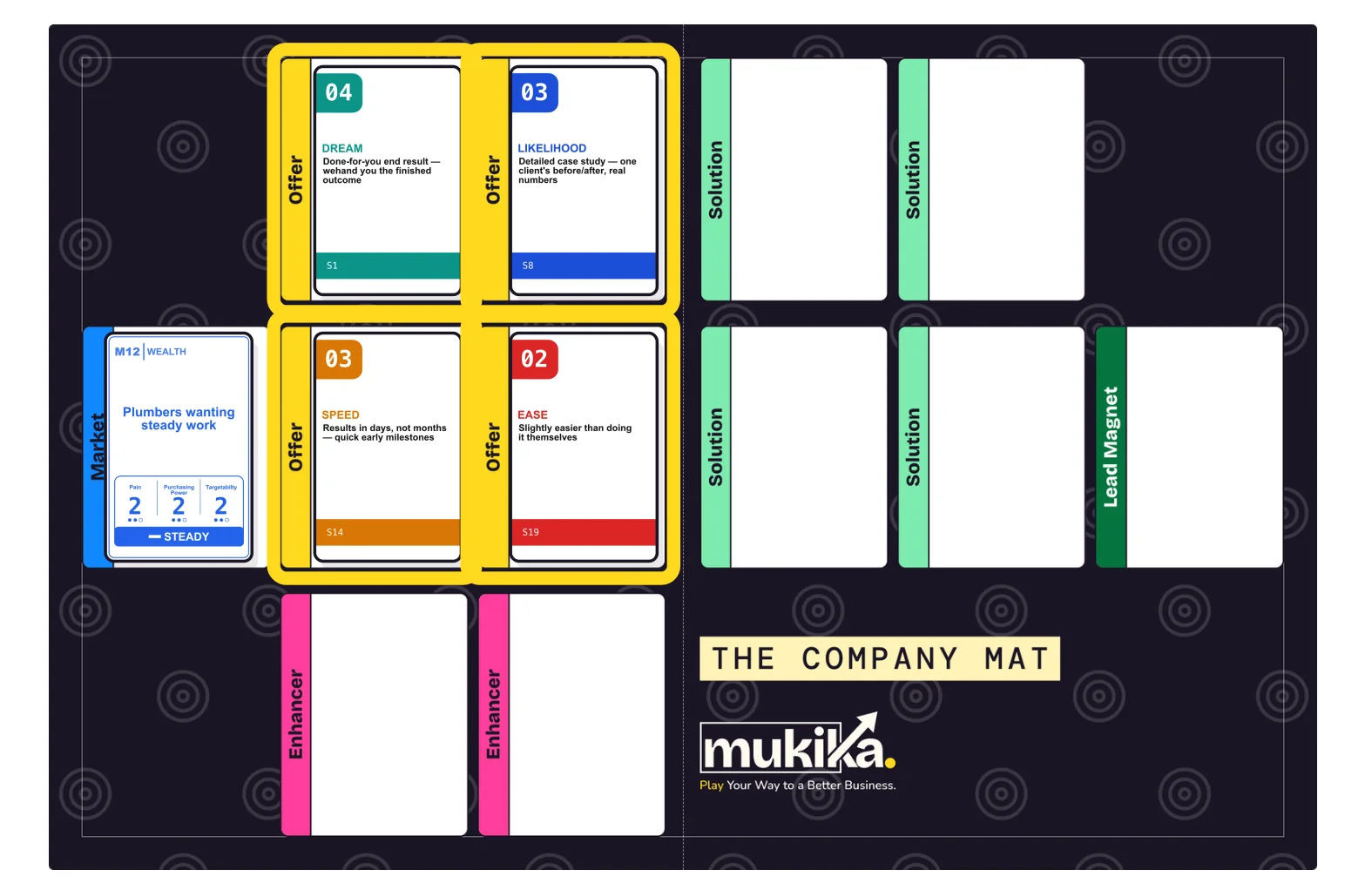
Up to four Solution cards, multiplied together. One weak part drags the whole offer down, exactly like real life.
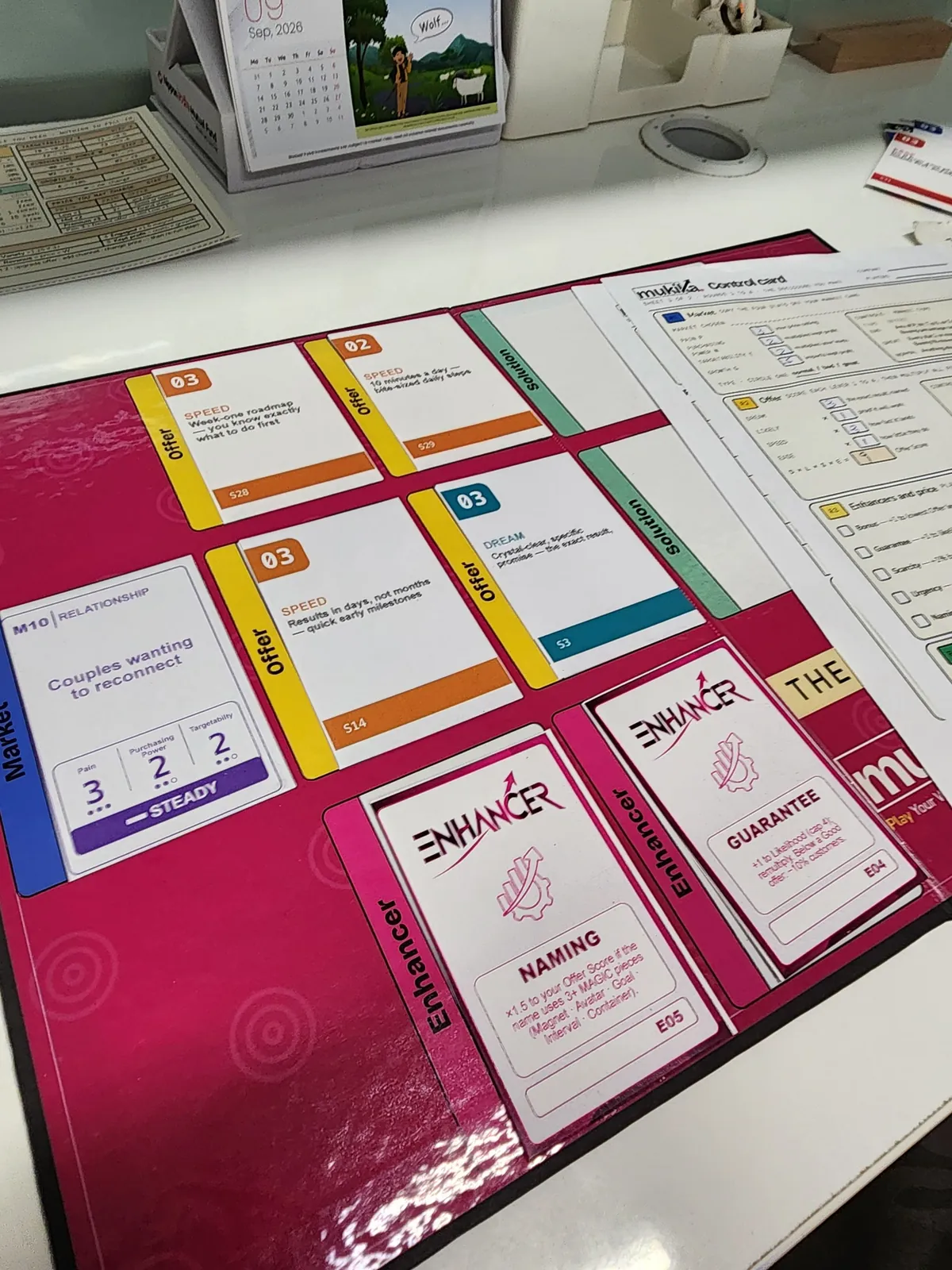
Enhancers make the offer stronger. Then Low, Mid or Premium. Premium has to be earned, never discounted into.
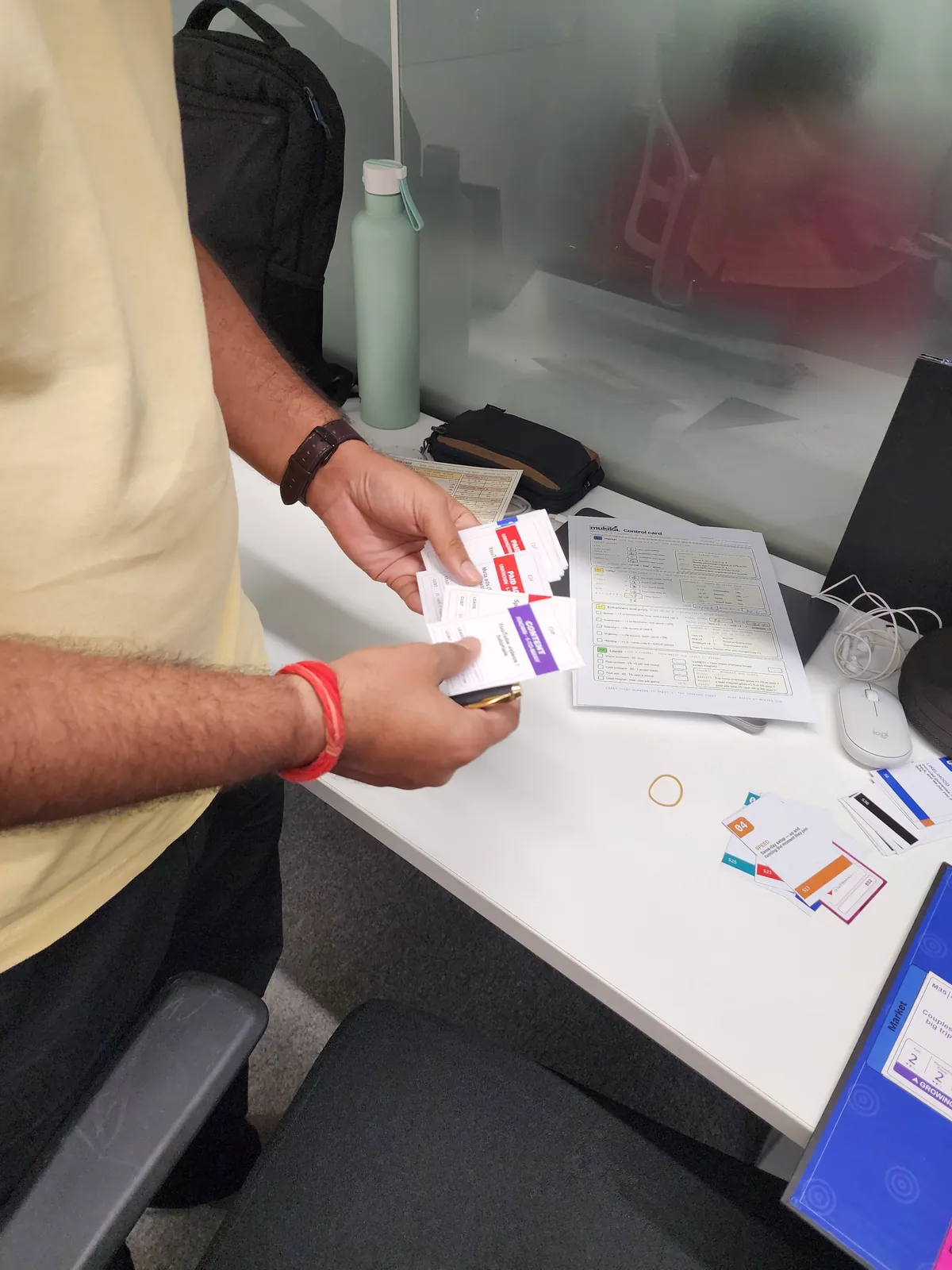
Warm outreach, content, cold outreach, paid ads and one lead magnet. Paid ads cost money.
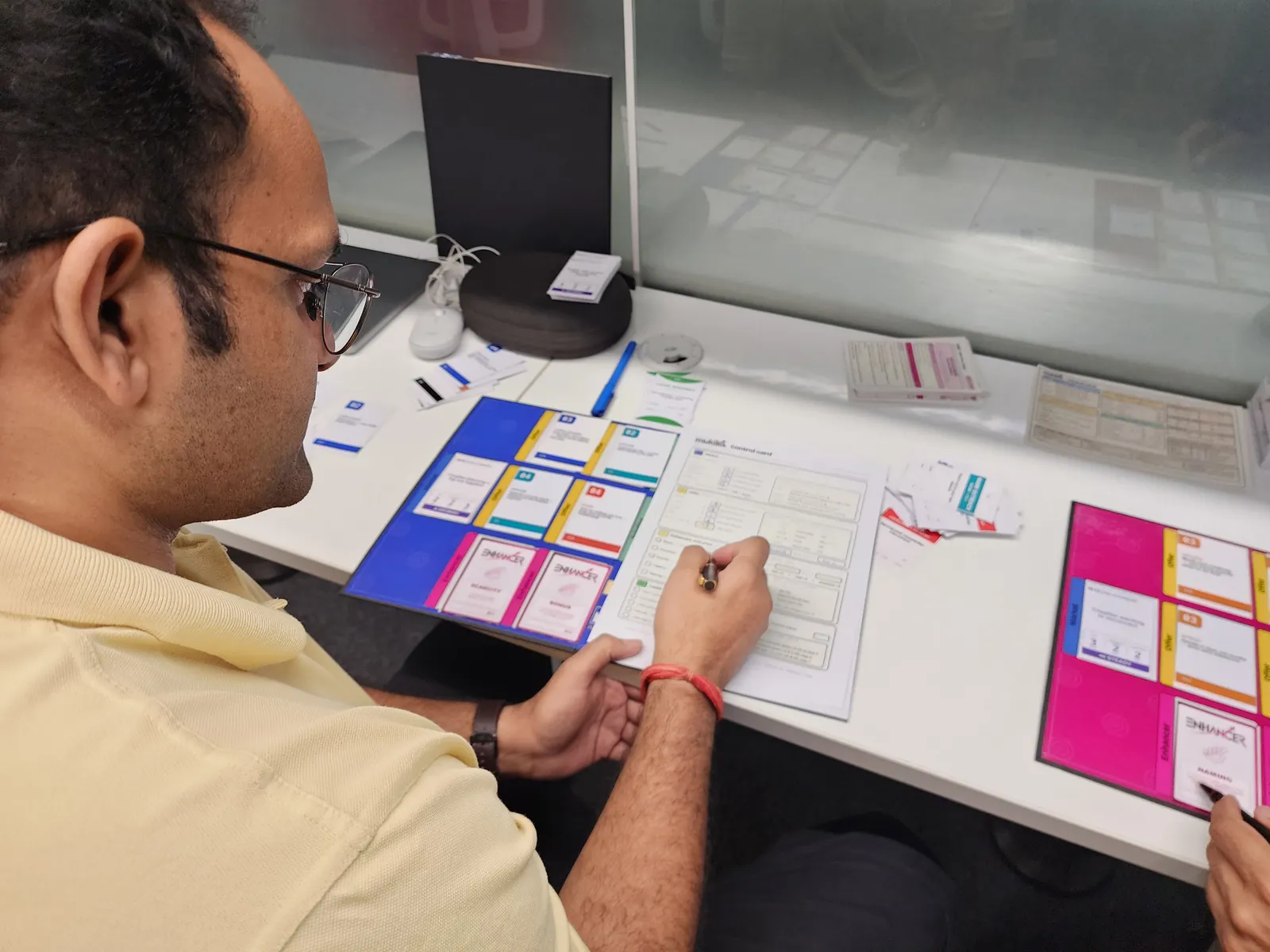
Every company works out its own customers and kept profit on the scoring sheet. The maths is the lesson.
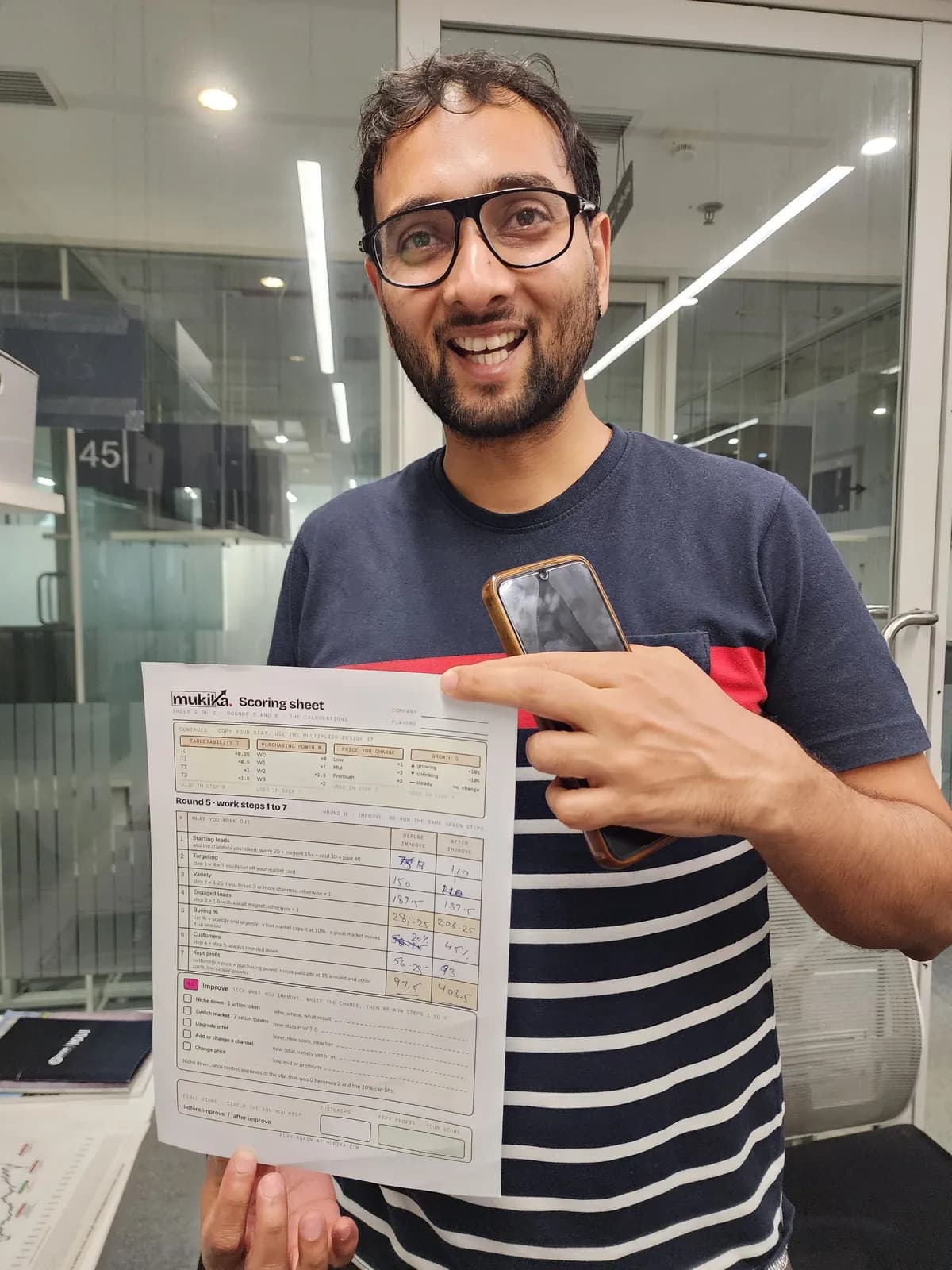
Fix your weakest part and score again. Nobody is knocked out, and last place can still win.
Then the debrief, where the game becomes your business.
See how to play, step by stepA course tells you what a funnel is. Mukika makes you build one, watch it leak, and fix it, in a single session with the people you work with.
| A marketing course | Mukika | |
|---|---|---|
| How you learn | Watching slides and videos | Playing against real peopleYou make a decision, the other companies make theirs, and the numbers show who was right. |
| Who it helps | Whoever signs up | Founders, sales and marketing teams, students and facultyAnyone who has to make something sell, whatever their role or experience. |
| What it helps with | Definitions to remember | Where your business is losing moneyIs it the market you sell to, the offer you make, the price, or the channels? The game makes you find out. |
| Time to first insight | Weeks of modules | One sessionBy round three most tables have spotted the weak part of their plan. |
| What sticks | Notes you never reopen | The round you lost, and whyPeople remember the market that burned them long after they forget a framework. |
| The maths | Theory on a slide | A funnel you calculate by handLeads, buying %, customers, price and kept profit: seven steps, worked out on your own scoring sheet. |
| Your team | One person gets a certificate | The whole room gets a shared languageMarket, offer, channel, conversion: the same words for everyone after one game. |
| What you leave with | A completion badge | Your own business scoredAnd a clear list of what to fix first. |
After the game
A game night ends with numbers. The real work starts the next morning, on your own business.
Your market, your offer and your funnel, scored. And the one part that cost you the most profit.
In a working session we score your actual market, offer and channels with the same maths you just played.
Then we rebuild it stage by stage: who you sell to, what you offer, where your leads come from. A plan you can run, not a list of tips.
A company engagement: the game for your team, then the plan.
Talk about your companyWe argued about the market for ten minutes. That argument was the whole marketing plan we never had.
 Ritika M.
My sales team finally understands why the cheapest offer lost. I couldn't teach that in a year of reviews.
 Arjun S.
Students who slept through the funnel lecture were doing funnel math out loud by round three.
 Prof. Meera K.
2.5–4 hours with debrief. Big rooms run in parallel tables.
8–15 in one group, 20–35+ split into tables. It's built for big rooms.
No. If you can read a card, you can play. The game does the teaching.
It's for anyone who has to make anything sell: founders, teams, students. Marketing is just the scoreboard.
Every team gets its full scored breakdown. If you want to go further, that breakdown becomes the starting point for consulting.
Yes, approved facilitators get session tools, projected round-intros, and auto-scoring. Apply on the Facilitate page.